Map Knowledge
Nuke Radar Tips + CS2 ESP Product
Nuke's vertical layout makes the in-game radar easy to misread. This guide covers legitimate radar habits — and how the Cheats CS2 product adds ESP and a radar overlay for spacing calls in FACEIT lobbies.
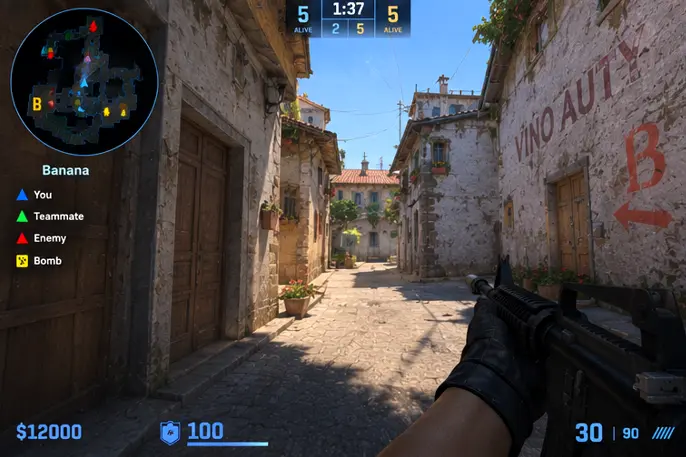
What the Built-In Radar Shows
The default radar displays your position, your teammates, and the information the game allows you to see: objectives, the bomb, and enemies spotted by your team. It is deliberately limited. Understanding exactly what it does and does not show prevents false assumptions.
Spend a round in a practice server watching the radar without worrying about anything else. Note how quickly dots update, how spotted enemies appear and fade, and how the bomb icon behaves during a plant.
Upper and Lower Levels
Nuke stacks its sites vertically, so the radar switches between views depending on where you are. When the map shows the lower level, the upper floor is hidden, and the reverse. Teammate dots on the other level can look misleading if you forget which view you are in.
Always check which level the radar is showing before you call a position. A teammate in Vents might look like they are standing inside the outside area on a single-layer view.
Teammate Dots and Spotted Enemies
Teammate dots tell you where your support is. If your team has clustered in one place, you know the rest of the map is thin. Spotted enemies appear because someone on your team sees them, so a sudden dot means somebody has eyes there, not that the map is revealed.
Use the information to ask better questions. Instead of saying someone is somewhere, ask your teammate what they saw and from where. Short, specific voice lines beat long speculation.
Pairing Radar With Sound
The radar is strongest when combined with audio. Footsteps, ladders, doors, and bomb sounds fill in what the dots cannot. Nuke is especially audio-heavy because of its metal surfaces and vertical shafts.
Train yourself to glance at the radar after hearing something, not constantly. Over time, the pairing becomes automatic and you spend more attention on your crosshair.
Callouts That Keep Teams in Sync
A shared vocabulary is half the value. Learn the standard callouts for outside, ramp, heaven, hut, and the lower areas. Use the same names every time so teammates do not have to translate.
Practice relaying radar information in a short format: where, how many, and what you are doing next. This is the same discipline described in FACEIT Lobby Prep under communication.
Practicing Without Shortcuts
The best way to improve is to play maps in practice servers, watch your own demos, and review pro matches. Keep your practice honest: the goal is understanding the map, not seeing more than the game intends.
Using software to reveal additional radar information in matchmaking or organized play breaks the rules and risks your account. We cover the broader subject in Understanding aim assistance FOV from an educational angle.
Radar Reading Checklist
Run through this list in a practice server before your next Nuke session.
- You know which level the radar is currently showing.
- You check teammate spacing before committing.
- You pair every radar glance with audio cues.
- You use standard callouts consistently.
- You relay where, how many, and what next.
- You review your demos after each session.
Why buyers use the Cheats CS2 product
The Cheats CS2 product hub bundles ESP, aim controls, radar overlay, and saved configs for Windows 10 and 11 FACEIT-oriented lobbies. Status is updated after Counter-Strike 2 patches, delivery is digital after checkout, and support is available 24/7.
Which plan fits you
Monthly access is $35 for 31 days; lifetime access is $150 with no day counter on the plan. Compare both on pricing and plans before you checkout.
Delivery, support, and policies
Orders deliver by email with a download link and loader notes. If something fails to load, use support with your order ID. Refund rules are in the FAQ and terms. First-time setup help lives in the setup forum.
Quick answers before you buy
How much do CS2 cheats cost?
Plans start at $35 monthly or $150 lifetime on the product pricing section. Confirm live status before checkout.
How fast is delivery?
Delivery is digital: after payment you receive email with access details, usually within minutes on a normal order.
Does it run on my PC?
The build targets Windows 10 and 11. Check requirements and HVCI notes on the product page before you buy.
Ready to compare modules and plans?
Starts at $35